Hospital and Clinic Promotional Products: What Should Visitors Take Home?
Posted in :
Hospital and clinic promotional products often begin their journey at a reception desk or community event. A visitor takes a branded gift home and picks it up again later. What does it tell them: the clinic’s name, how to get in touch, or simply that someone gave them a free item?
That is a useful starting point for choosing hospital and clinic promotional products. The item needs a reason to leave the building—and the information on it needs to remain useful afterwards.
Start with the journey home
Picture the end of a community event. A visitor may already be carrying leaflets, appointment information and belongings. A giveaway should be easy to accept and carry.
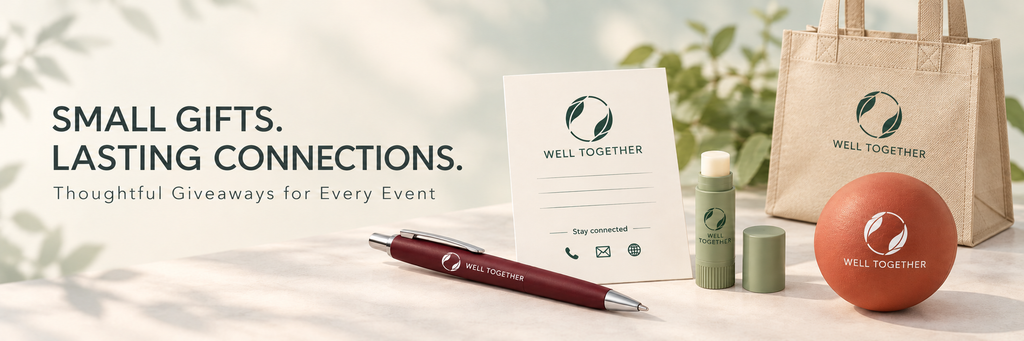
A ball pen can travel with an information card. A compact lip balm can fit into a pocket. A stress ball takes more space, but offers room for a clear visual design. The choice depends on the event, the recipient and what the organisation wants them to remember.
Try the proposed item with the actual handout. Can staff offer both comfortably? Does the packaging cover the contact information? Will the recipient need another bag just to carry the gift?
These details help turn a catalogue choice into something that works at the event.
Let the card explain the service
A small promotional product cannot explain an entire clinic.
Opening hours, booking instructions, departments and service descriptions belong on a readable card or leaflet. The product can carry a simpler identity: the organisation’s name, a recognisable logo and one useful contact destination.
For example, a clinic opening could pair a branded pen with a card explaining how to make an enquiry. A community event could use a campaign message on a stress ball while the accompanying leaflet provides the detail.
These are possible arrangements, not fixed packs. Choose the combination around the information people need after they leave.
If you print a QR code, check the destination on a physical sample. Someone also needs to maintain that page after the campaign ends. A short printed website address gives recipients another way to find the organisation.
Decide what the gift should say
Healthcare branding needs a considered tone. A recruitment event, a family information day and a clinic reception desk do not call for the same message.
A stress ball might carry a friendly illustration or a simple organisational identity. Present it as a giveaway rather than making claims about treating stress or anxiety.
Lip balms offer a different kind of take-home item. Review the selected product’s ingredient information, packaging and shelf life before choosing the artwork. Leave its product information readable.
Pens give less room for explanation. Test the final print size: a clear name may do more work than a logo, slogan, telephone number and website squeezed onto one barrel.
Look at the design from the recipient’s position. Can they understand who supplied the item without having to decipher tiny lettering?
Give staff something beyond the event giveaway
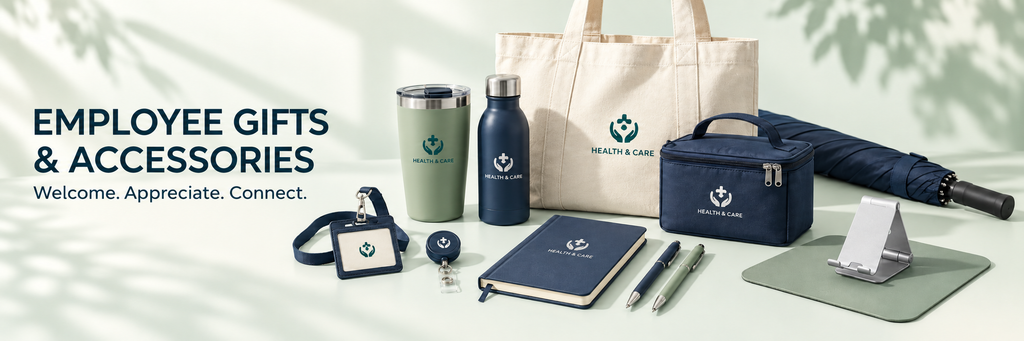
An employee welcome gift can introduce the organisation while offering something useful during the working day or the journey home.
Start with identification accessories where they are needed. Badge holders and badge reels should fit the organisation’s existing cards and the way staff use them. Check the dimensions, attachment and scanning access with the team before choosing a design.
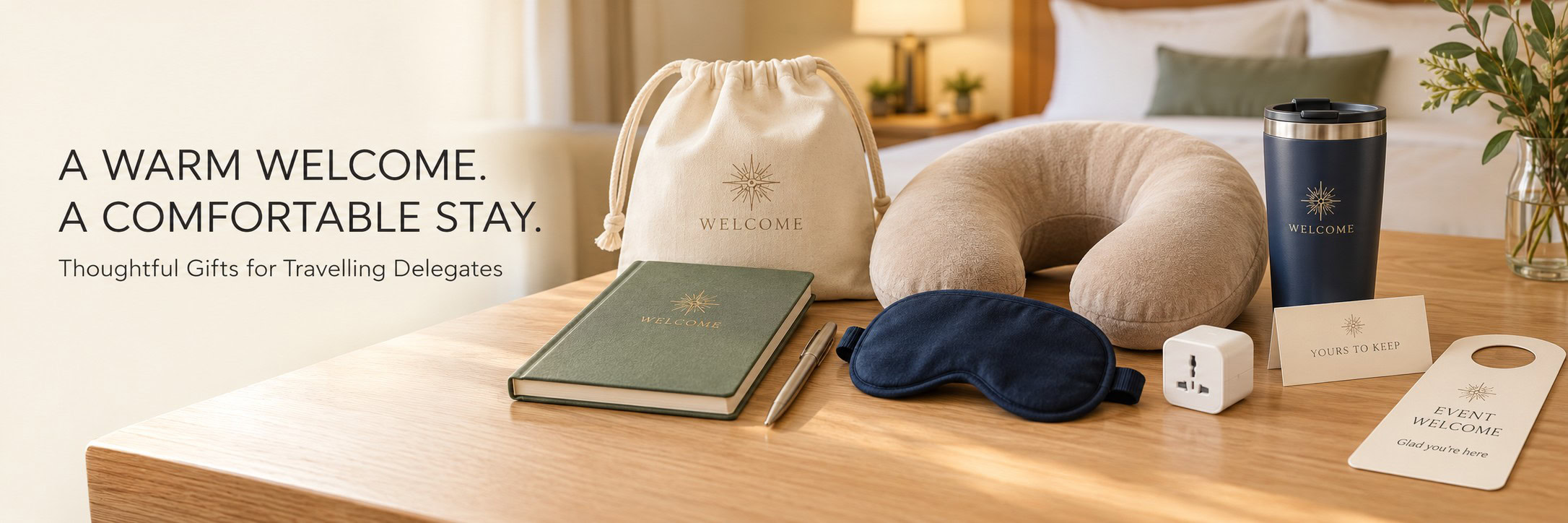
For a broader welcome pack, consider a notebook and pen alongside a tumbler or water bottle. Review the drinkware’s lid, size and care instructions, and ask the organisation where personal drinkware may be used.
Tote bags and lunch bags offer another direction for employee benefits or team gifts. Choose around what they will carry: documents and personal belongings need a different bag from a packed lunch.
Phone stands and mouse pads may suit reception, administration and other desk-based roles. They need not become standard contents for staff who spend little time at a workstation.
Umbrellas can work as a separate staff appreciation gift without adding another item to the welcome pack. Check the folded size, opening mechanism and available branding area.
Choose a small combination with a clear purpose. A desk-based employee might receive a notebook, pen and phone stand; a team appreciation gift might pair a tote bag with a tumbler. Confirm the selection with the organisation rather than assuming every role needs the same items.
Keep these employee gifts separate from products distributed to patients and visitors, and coordinate the branding so the selected pieces feel like one considered set.
Hospital and clinic promotional products for different occasions
Use these examples as starting points. The final selection should reflect the occasion and the organisation’s requirements.
| Occasion | Products to consider | Information or purpose |
|---|---|---|
| Clinic opening | Ball pen with a contact card | Introduce the clinic and explain how to make an enquiry |
| Community information event | Stress ball with a campaign leaflet | Connect a simple visual message with more detailed information |
| Take-home giveaway | Lip balm with an information card | Keep the organisation’s identity separate from readable product information |
| Staff welcome | Pen and badge holder | Support everyday writing and staff identification |
| Recruitment event | Branded pen with a careers card | Direct interested visitors to current vacancies and application details |
A focused combination can be easier to explain and distribute than a pack containing every available product.
A familiar healthcare product still needs its own review
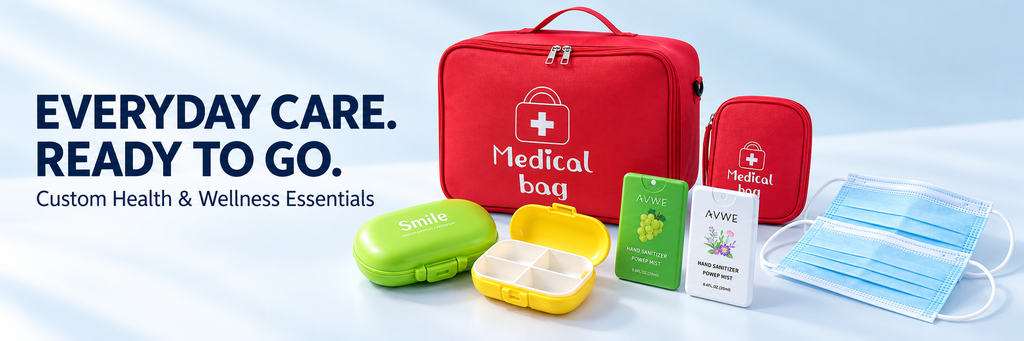
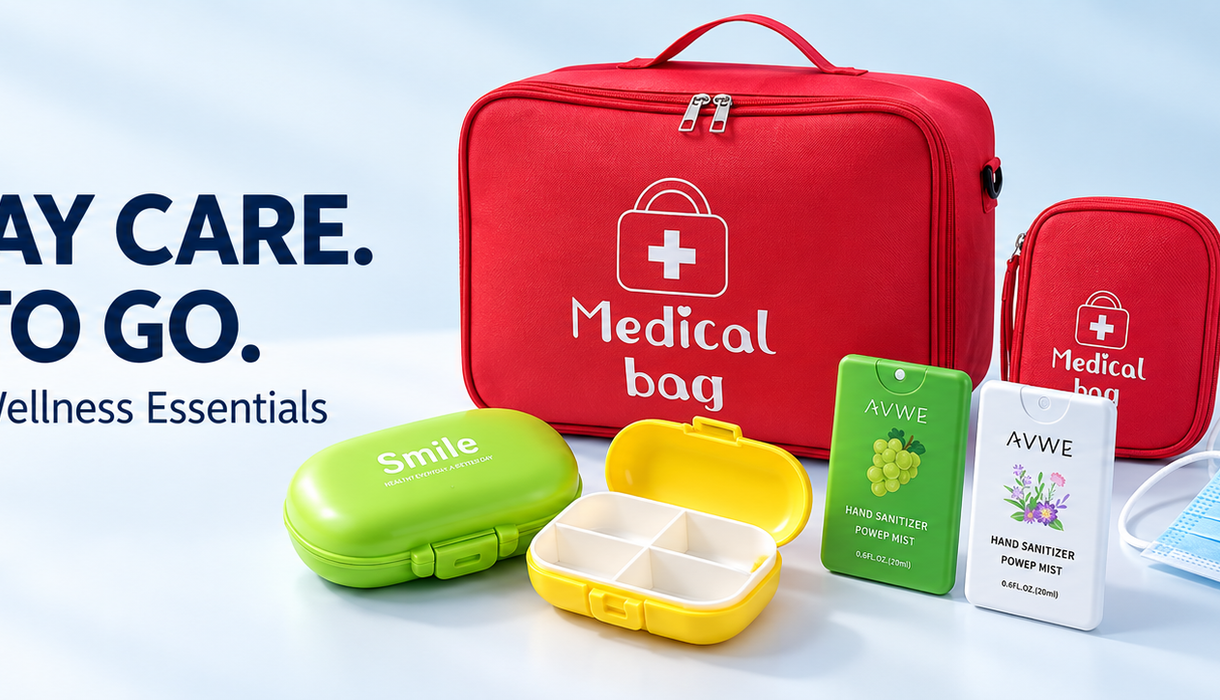
First aid kits, pill boxes, face masks and hand sanitizers may appear alongside ordinary merchandise in a catalogue. Their intended use needs to be clear before they become part of a hospital or clinic order.
With a first aid kit, establish whether the quotation covers an empty branded pouch or a specified set of contents. With a pill box, review the actual compartments, closure and instructions; do not assume that every design suits every recipient.
For masks and hand sanitizers, ask the organisation to confirm the specification and supplier information it needs for the proposed setting. A product offered at a public event and a supply intended for clinical use may follow different purchasing requirements.
The useful question is not “Can we print our logo on it?” It is “Who will use this particular product, and who needs to approve it?”
Rehearse the handover before ordering
Set out the gift, its packaging and the information card on a table. Ask a colleague to play the visitor while someone demonstrates how it will be offered.
Notice what happens. Does the recipient understand the purpose of the pack? Is anything difficult to hold? Does staff need to explain where the contact details are?
Then look at the other side of the table. Check how the products arrive, how cartons will be labelled and where spare stock will sit. If the event is inside a larger hospital, confirm the receiving location and the person responsible for moving the order to the event space.
A brief rehearsal can expose practical details that a product image cannot show.
Discuss your hospital and clinic promotional products
Tell EV-PROMO what you are preparing: a clinic opening, a community information event, a recruitment day or a staff welcome pack.
Share what recipients should take away from the occasion, along with your quantities, budget and required delivery date. If your organisation needs particular product information or approvals, include those requirements at the start.
We can help you compare hospital and clinic promotional products that fit the occasion—and give each selected item a clear place in it.